Morgan Smith

 Checking for Understanding

At the beginning of the year, I always had the best intentions to meet with students when I found a free second so that we could go over any problems that they were having, but I quickly realized that the idea of a "free second" did not exist as a classroom teacher. I rarely found time to apply any real quality checks for understanding, and often found myself not knowing how students were doing in a certain area until after I graded their exit slips. Had I been using the strategies that Doug Lemov identifies in his book to help check for understanding DURING a lesson, I could have saved myself from having to re-teach whole lessons. 

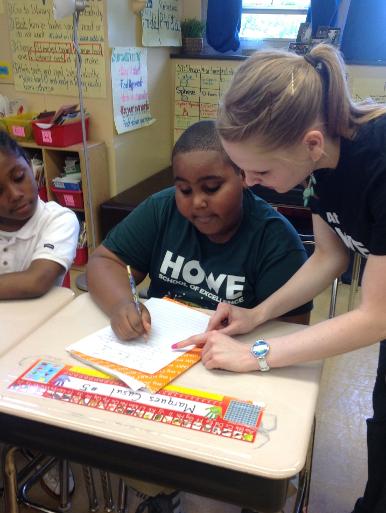
 Meeting with a student during a Writing Conference.

Tracking Grades

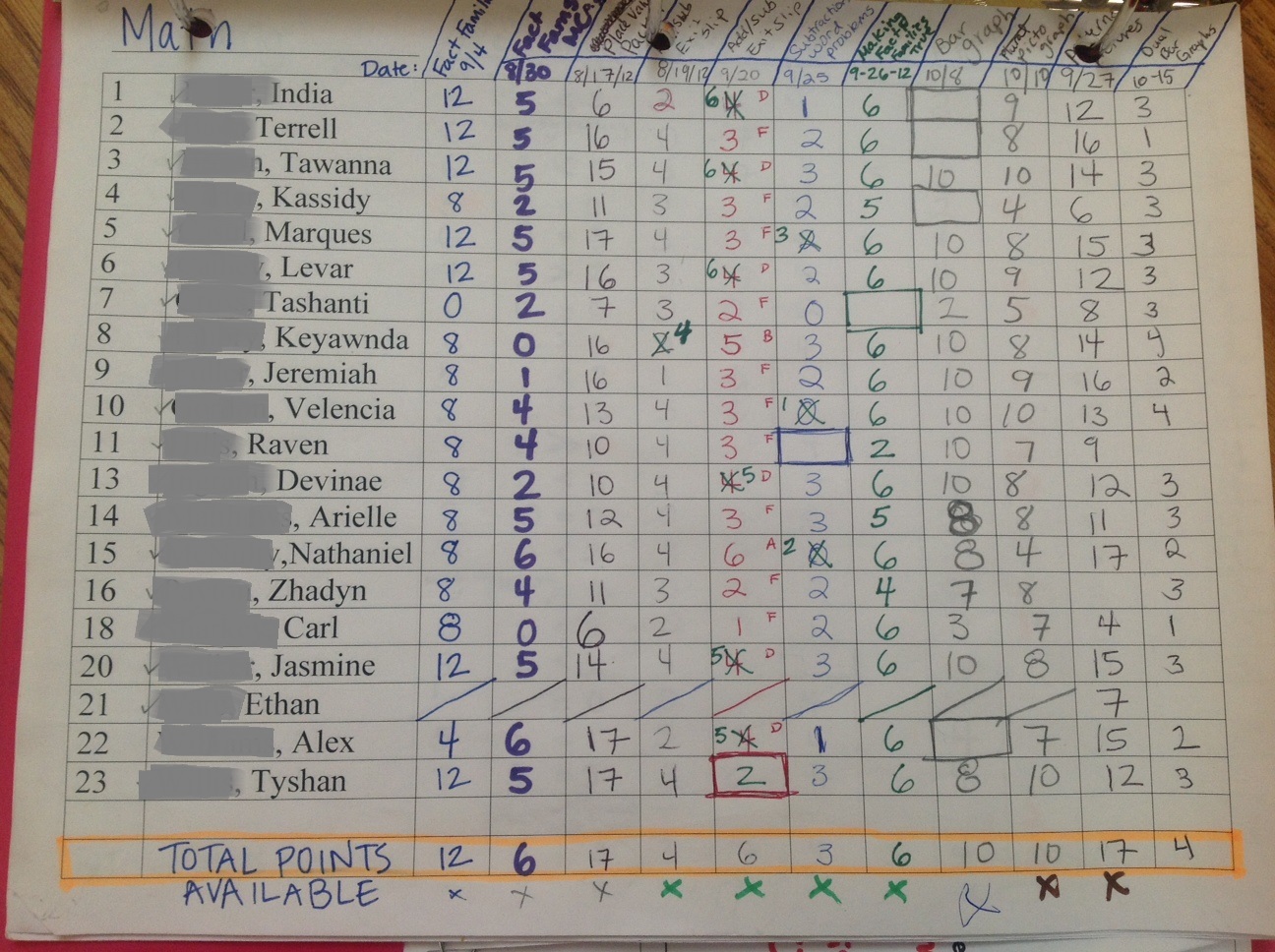
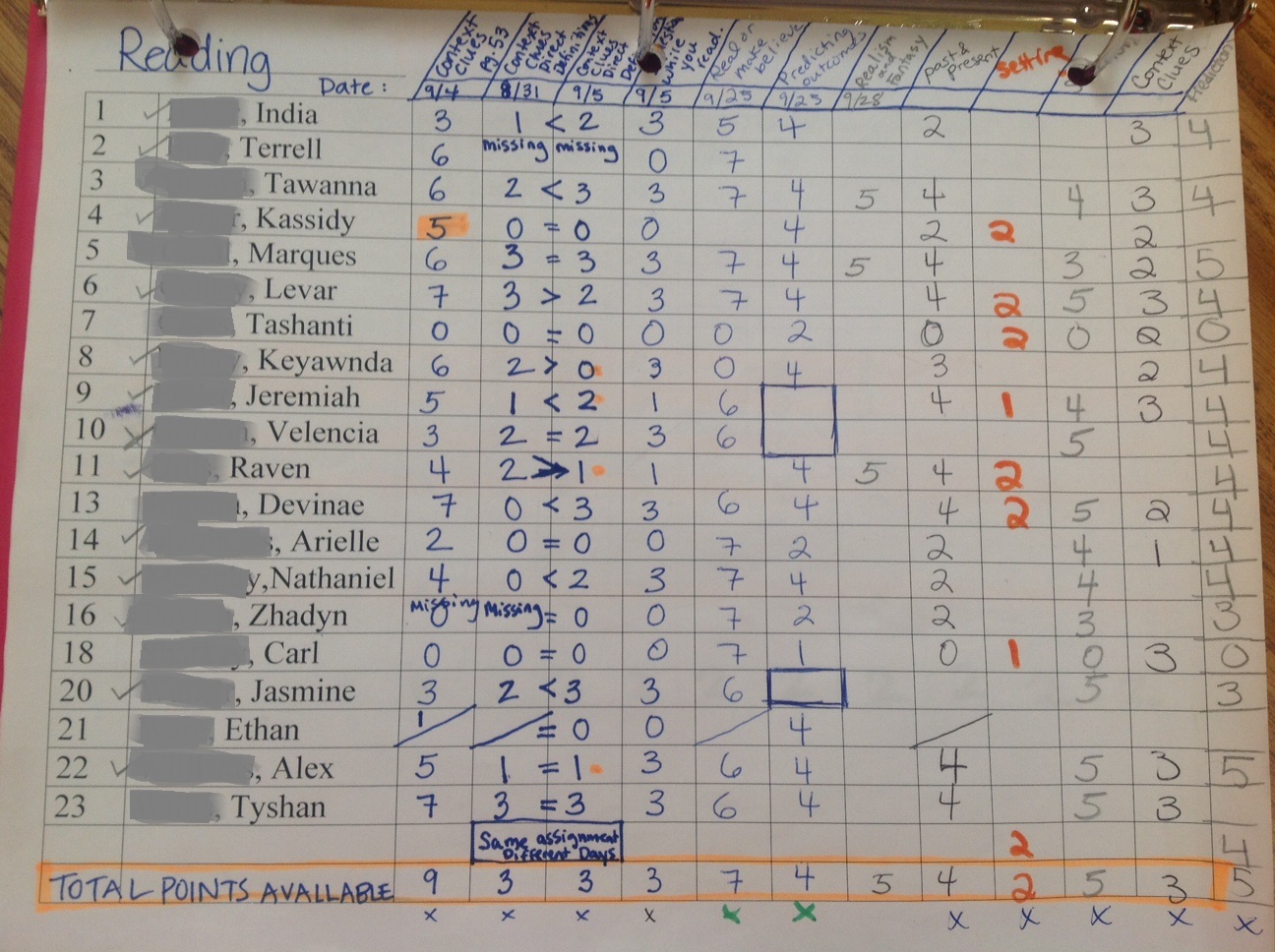
Since the beginning of the year, I have been tracking student grades on grade sheets that are kept on a clip board. At the beginning of the year I would grade student work and record their grades on the sheet, and at the end of the semester I would enter them in the online grade book. However, very rarely did I analyze this data and look at any trends that were happening across the class. I would however use the student grades to quickly determine re-teach groups to see which students needed to have extra instruction in a small group setting.

Checking for Understanding

Checking for Understanding is a  strategy that Doug Lemov says helps teachers "seek constant opportunities to assess what your kids can do while you're teaching and using that knowledge to inform what you do and how you do it." Essentially, it is a proactive approach to dealing with misconceptions rather than a reactive approach. This quick means of gathering data on student learning has helped me numerous times to reassess what and how I'm teaching, and to respond to this data by "doing something about it."

After participating in a module with MRCs, Katie Lyons and Mike Nick, and working with the Relay Graduate School of Education, I had the opportunity to engage in some seminars on how to more thoughtfully and systematically make use of the Check for Understanding Strategy in my own classroom. In the Spring, I began to more frequently use the CFU technique to inform my teaching.

In this video of a division lesson, I make use of two CFU strategies: gestures, and over-the-shoulder. In "gestures" (0:36)I have students show me a gesture (a 1 or a 2 under their chin) to gauge how many students got the correct answer. I then am able to do a quick re-teach when I notice that one group got it wrong. The second strategy I use, "over-the-shoulder" (3:30) is a technique where I circulate around the room and check students' work over their shoulders. I can point out quick-fix mistakes, or quickly reinforce something that a student is doing correctly. 

Tracking Grades

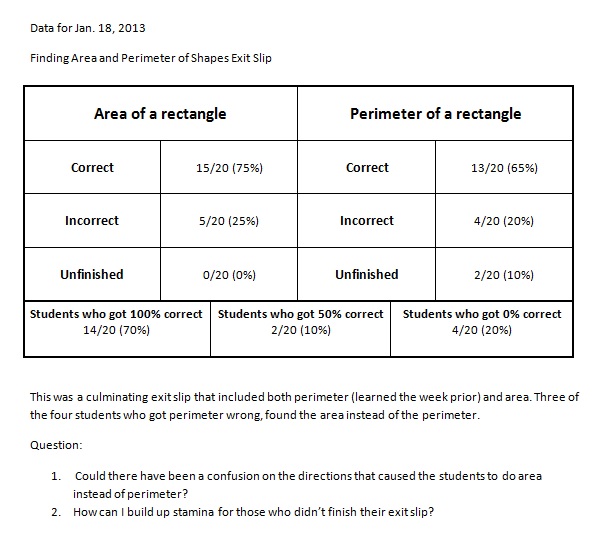
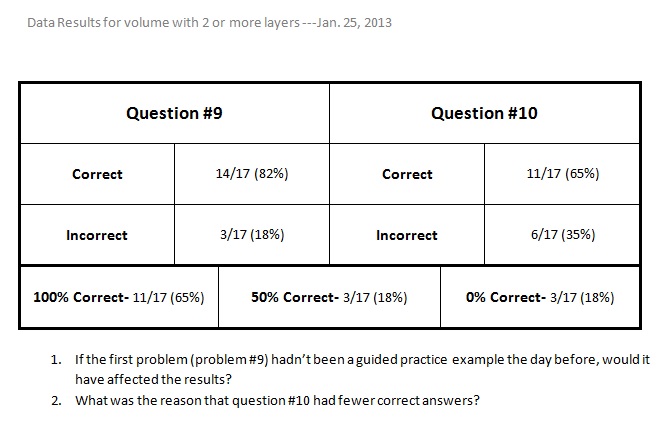
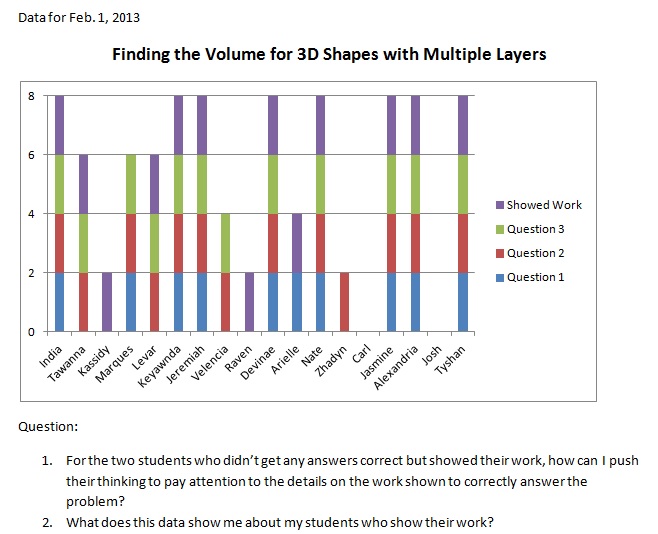
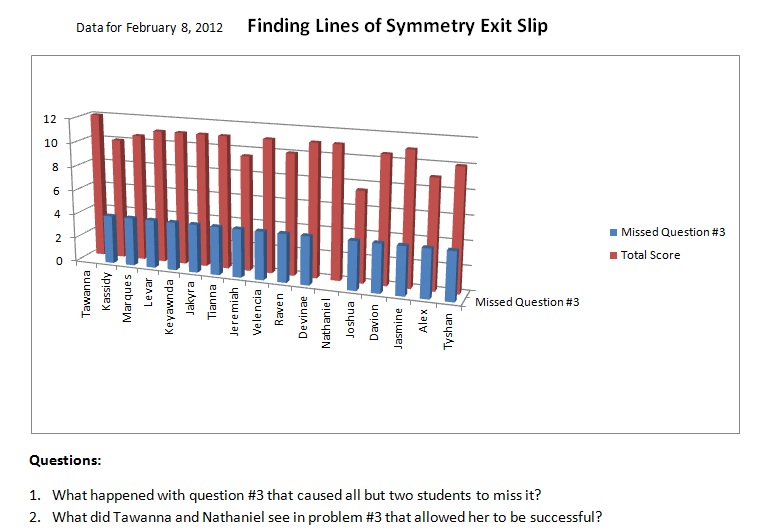
In the late winter and in the early spring,  I started being more diligent about analyzing the data that I was gathering from their grades. I started doing it for class at National Louis, but it quickly became a habit that I did while grading student work. I typically just look at the grades and break down which problems or questions seem to be struggles for students the most. Sometimes I throw the data into a chart on Microsoft Word, or a spreadsheet on Excel. Sometimes I break down the data into graphs, and other times I just quickly jot down my notes on a post-it note and put it into my data binder.

Doing this regularly helps me track student learning over time. I can look back and easily and see the concepts that students struggled on. With this data I can not only collect summative data, but I can turn it in to formative data that I use to inform my instruction.


Next year, I plan to use the Check for Understanding strategies from Doug Lemov's book, Teach Like a Champion from the first day of school. I want to make it a habit to continuously check for understanding so that I can then address any issues or misconceptions as they arise, instead of waiting until after. This way, I will save myself from not only having to re-teach lessons, but also from certain behavior problems that may arise because of lack of understanding of procedures.

In addition, next year I plan to continue to interpret student data, by creating data displays, which will help me look at trends and track student learning over time. As a first year teacher, this will be especially beneficial because it will help me pinpoint areas that I need to improve on in teaching, and help me determine certain students that may need a more differentiated curriculum.

Next year, I also plan on using MAP data from the Fall and Winter NWEA tests to help inform the small groups that I will set up. I will assess students in those small groups on the various DesCartes skills in their RIT Band so that I can determine whether or not those students have mastered a certain skill and need to be moved to a different group.