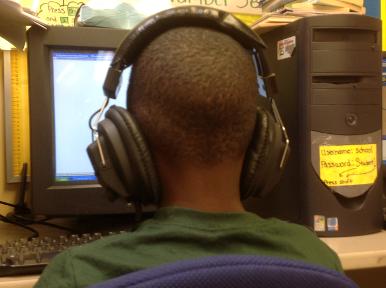
Identifying Areas for Growth during Fall Lead Teach In the Fall, much of my instruction was teacher-centered. In this sample video of my teaching from November, I began the lesson with a very shaky description of what it was that we would be learning about that day. I talked for nearly 10 minutes straight before giving students a chance to interact with one another. At one point during this lesson (9:20), right before students turned and talked to a partner, I told them I wanted them to think about a time when they felt wonderful (to make a connection to the story), but then I didn't give them any time to think-- instead I just had them start talking immediately. This is something that I quickly recognized when I saw this video after it was recorded, and made an effort to change in my teaching throughout the year. I realized that my students needed more thinking time before jumping into discussions. In addition, during my reflections on this lesson in the fall, I recognize that I could have asked more questions throughout the lesson, and broken up my teaching with opportunities for think time. It really feels like I was rushing through this lesson, and trying to get through as much as I possibly could. If I spent less time talking, and had more questions prepared to get them thinking, I could have slowed down the lesson, plus increased the amount and rigor of student thinking that would be occurring. |
If I could do this lesson over again, I would start it off by putting a huge emphasis on the "deep" text-to-self connections. I would provide an explicit example of a feelings connection to a situation in the text, an action connection to the text, and a reaction connection to the text. I would also get myself out of the driver's seat much more quickly, and get the kids talking much sooner than I had them talking this time. I need to keep my talking to a minimum and get my students engaged in active learning immediately. Part of this active learning could have been giving them a purpose for listening to the story. Even just simply telling them, "As I read this book, I want you to be thinking of examples of text-to-self connections that you can make," my students would have been engaged in more active learning. I should have thought more about what the problem areas were going to be in this lesson and planned for them ahead of time. Had I anticipated the misconceptions, I could have prepared more probing questions from Bloom's Taxonomy question stems to help get them thinking and responding instead of me just giving them the correct answers.  |
|
| 
Showing Growth during Spring Lead TeachBy the Spring, after much coaching and self-reflection, I really improved on increasing student's time engaged in active learning, and decreasing my time on stage. The more time that I spent planning my lessons and thinking about the types of questions that I could ask, drastically improved the smoothness, and authenticity of my lessons. In this lesson, high levels of student engagement are clear, when they initiate a round of applause (0:45) after I hook them with a personal story and then read to them an example of a persuasive poster. At the beginning of this lesson, I gave students a very clear purpose for the lesson (1:45). Students knew exactly what we would be learning that day, as well as how they would be assessed at the end of the lesson. Throughout the lesson, I break up my teaching with plenty of opportunities for students to share out, and reflect on previous learnings from the days prior (2:10). In addition, the longest time that I spend talking at any one point is about a minute. Even though this video highlights the introduction and modeling portions of the lesson, it's not about me--it's about the students.
Because I have the mindset of always continuing to improve my practice, if I could do this lesson differently, I would have given students more think-time, as well as provided them with the opportunity to do a think-pair-share at some point as well, probably when I asked them about author's purpose in the days before (2:10). This would have ensured that all students got a chance to share out their important ideas.
In addition, I should continue to work on my "poker face" while I teach. Too often in my facial expressions, I give away my excitement for a student's correct answer, or confusion for a wrong answer. By maintaining my "poker face" in teaching, I could push for more student-student discussions to determine an answer instead of me giving it to them.
|
Reducing Student Stress
One way that my instruction has changed and improved over the year, is understanding how my students learn best. I've recognized time and time again that when my students are happy, they are learning. But because many of my students live in high stress environments, often time that stress transfers into the classroom, and happiness seems extremely far off. When I see tempers start to flare, and stress levels feel high, I know it's time for a brain break! Eric Jensen says that, "Evidence suggests that stress is a significant factor in creativity, memory, behavior, and learning. Teachers who purposefully manage stress factors in class are likely to experience a positive classroom environment." The ways that work best in my classroom for managing stress are stretching, quick exercises, a short game, or their favorite and mine singing and dancing. My third graders don't have a music class at school, so they get extremely excited any time singing or dancing is involved. It's amazing how 3 minutes of brain breaks can save a whole day of teaching and learning.
|